Easy method to make leavened dough for pizza and bread

Ingredients for 1.3 kg. of dough:
- 800 g. of 00 flour
- 500 g. of water
- 25 g. of salt
- 2 gr. of fresh brewer’s yeast
Preparation:
Making leavened dough at home can be a rewarding experience, allowing you to customize the taste and texture of your pizza. You can use high quality ingredients, control the leavening process and obtain a healthy and genuine base for your pizza. The recipe might include flour of various types, water, brewer’s yeast or sourdough, salt and olive oil or lard, which are kneaded together to form a soft, elastic mass. Subsequently, the leavened dough is left to rest and rise for a few hours, so that it can develop all of its unique flavor and texture.
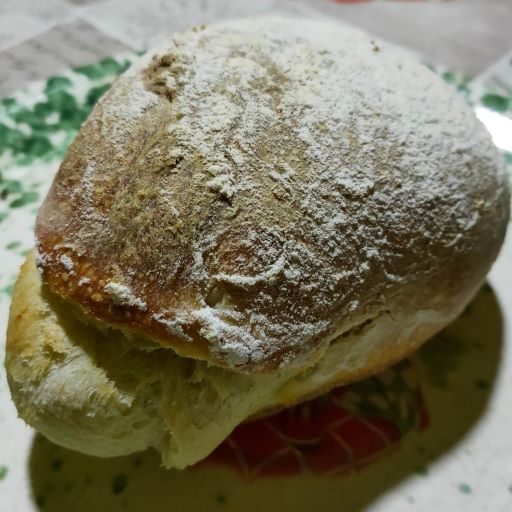
Bakery is a specialized world apart, there are thousands of ways to make the dough depending on the use. This one shown on this page is one of the many, simple, domestic ones that I often use to make pizza, but also bread.
Proceed as follows: in a glass with 100 gr. of tepid water, dissolve the yeast with half a teaspoon of sugar. Mix all the ingredients and the remaining water in the mixer for 10 minutes.
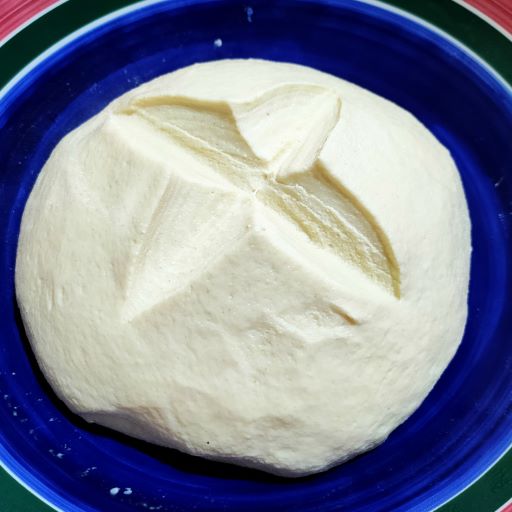
Put the dough in a large bowl, cover it with a cloth and keep it in the fridge for 6 hours. Mix everything again and if you have to make pizzas make 100 g balls, place them on a floured surface at a distance twice the diameter of the ball and let it rise outside for another 5 hours. If you want to make bread, portion the dough according to the size of the bread you want to make. You can put them in the oven off with the light on. The leavening is very sensitive to the external temperature so the times and the effects, if you are not in a protected and controlled environment, depend on the season. It must at least double the volume.
For homemade bread you can use a mixture of wheat semolina and 00 flour, slightly increasing the proportion of water. If you feel like it, start using sourdough, if you can get hold of it, but it’s a new world that requires perseverance and dedication, while the availability and use of brewer’s yeast is definitely much simpler.

Memorie:
My mother tells me that my grandmother had this method: from the previous baking she kept a loaf in a damp cloth so as not to dry out too much. This was called “Frumentu” and contained the necessary sourdough for “fermentation”, leavening with the enzymes present. The night before preparing the bread, he dissolved this loaf in warm water. Mixed with the flour, he made a small dough and put it in a large conical terrine called “xivedda”. He would coat this dough with more flour and leave it overnight to rise and release yeast spores into the flour.
The next morning, typically bread was made on Saturday around 4, a dough was prepared with the previous evening’s mixture, flour, water and salt. At the time, home-made flour was used with wheat grown in the surrounding fields. Generally it was durum wheat of native varieties.
At a domestic level it required a rather tiring manual kneading of the dough. The dough was then left to rise for about 2 hours. After this time they worked energetically, with an operation called “spongitura” to make the dough soft. It was separated into loaves of the desired size and left to rise again. The loaves were placed to rise in large flat baskets made of woven rush and were separated with tablecloths, abundantly floured with care and precision, at a distance that took into account the growth in volume due to leavening. Meanwhile, the wood-burning oven was heated to a high temperature. To put the leavened loaves in the oven, the oven was freed from the embers and cleaned with brooms, made from time to time, of fresh branches which also released a particular scent.
The loaves were placed in the oven by inserting the loaves with oven shovels and with skill the internal temperature was regulated by varying the opening of the mouth of the oven and also with the quantity of embers positioned at the entrance. The production was weekly and the quantity had to be enough for the whole large family, quantities that even reached 30 kg. of bread produced at a time.
The rest of the week was dedicated to the production of flour and other products deriving from the domestic grinding of the grain made with stone millstones, called moles, moved by animal traction, typically that of the donkey which therefore assumed the specific name of “molenti” . Even the manual activity of producing flour and its derivatives was quite tiring.